TEXT → SHOT → SCHOLARSHIP · 2026-08-13
The Irrational Cut: How the Interstice Becomes a Lectosign
A method for reading images through autonomous audio-visual series, incommensurable limits, and stratigraphic relinking
Concept relation
- 01Sound and image form autonomous series→
- 02The transition leaves action and unified space-time→
- 03The gap relinks both sides through difference→
- 04The viewer relinks text, strata, and absence
The irrational cut makes the gap between shots, sounds, or audio-visual series structurally operative. The series no longer follow from action, causality, or a unified whole, yet are relinked at an incommensurable limit; the lectosign demands their stratigraphic relinking.
Cinema 2 chapters 7, 9, and 10 establish the interstice, irrational cut, and lectosign and directly analyze La Femme du Gange, India Song, and From the Clouds to the Resistance. All three Tropical Malady scene readings are atlas analyses.
Primary coordinates
DELEUZE PRIMARY TEXTthe irrational cut
FACT → RELATION → TEST
The cut changes from transition into relation
The irrational cut belongs to neither adjoining series; with a duration of its own, it determines how the two relate.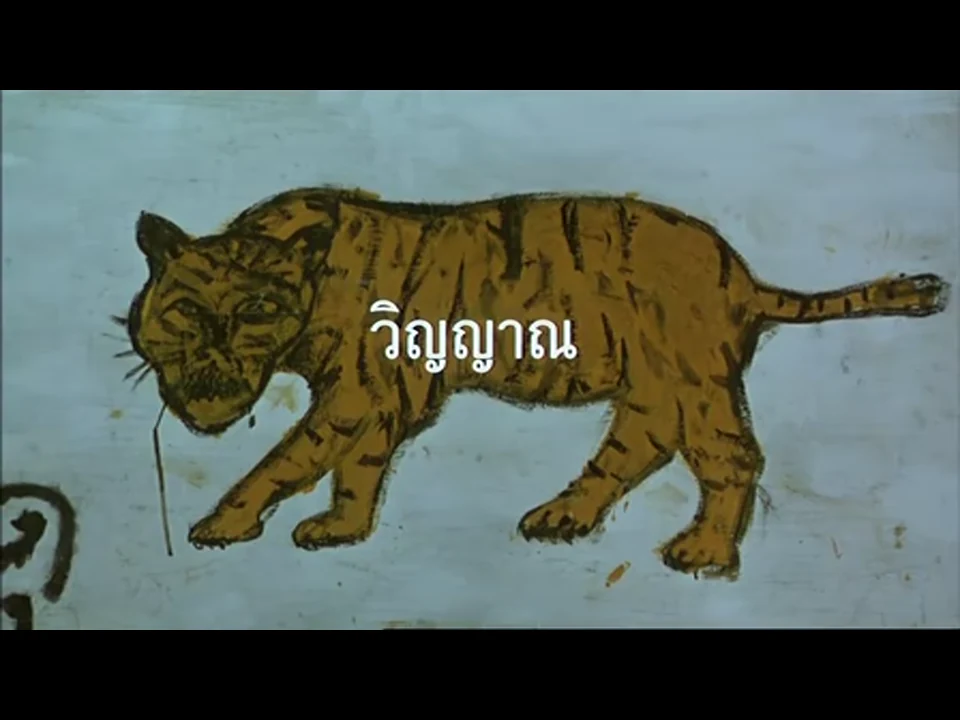
Photographs, black screen, and a second title sequence headed 'A Spirit's Path' sever the everyday love story of the first half. Bilibili timecode 00:58:55.
Open scene evidenceClassical linkage assigns a cut to the end of one shot or the beginning of the next, with action and causality explaining the transition. The irrational cut releases the cut from both sides: blackout, false continuity, heterogeneous intertitle, or sudden regrouping gives the gap a duration of its own.[1, pp. 173–180, 245–248][3, pp. 165–196]
Tropical Malady moves from the couple's photograph into blackout, an intertitle bearing a tiger and the word 'spirit,' and then the night forest. The second movement cannot be deduced from the preceding romantic action, yet the same actor, tiger, legend, and sound layer keep the movements in relation. The gap resets their rule of linkage without erasing either side.
FACT → RELATION → TEST
Audio-visual disjunction establishes an incommensurable common limit
Sound-image and visual image unfold autonomously and touch through distance rather than restored synchronization.In La Femme du Gange, two timeless voices and the visible image unfold separately; voices do not belong to visible mouths and the visual does not illustrate sound. The series touch only at their limits and at a point at infinity, turning incommensurability into a new relation.[1, pp. 251, 257, 260–261]
In India Song, voices preserve a history of vanished relations, while empty rooms, bodily attitudes, and closed mouths form another visual stratum. Neither sound can own the absent event nor image restore it; the series meet at the edge of absence.[1, pp. 257, 263–264][2, pp. 162–171]
FACT → RELATION → TEST
Reading means relinking strata
The lectosign requires the viewer to rebuild an open route across image, sound, text, history, and absence.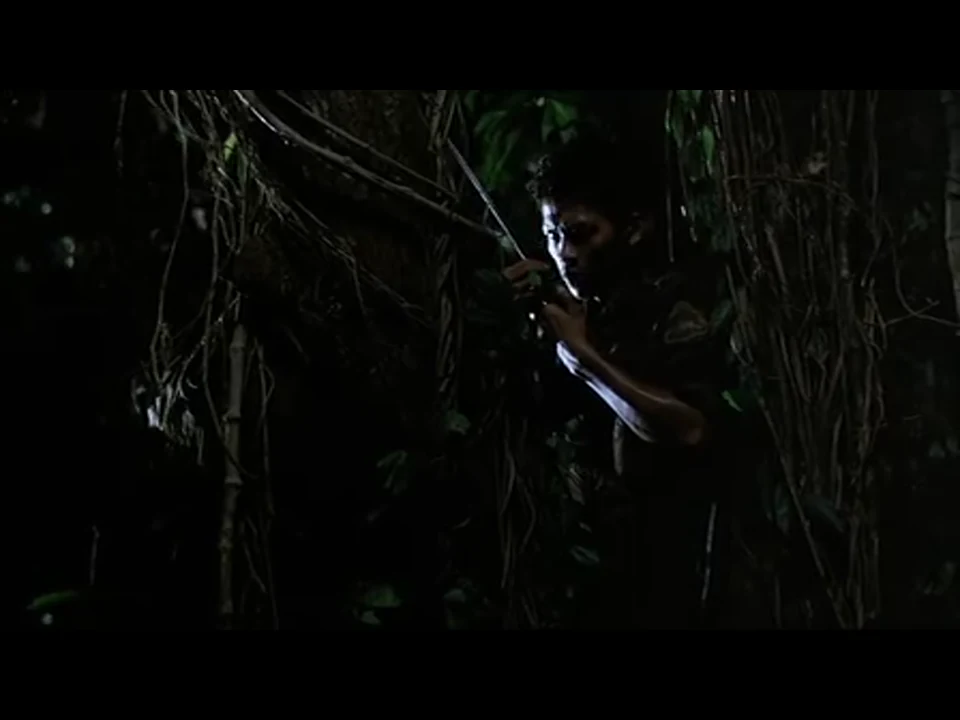
The communication device sends a call but does not turn the forest back into a mappable action-space. Bilibili timecode 01:08:47.
Open scene evidence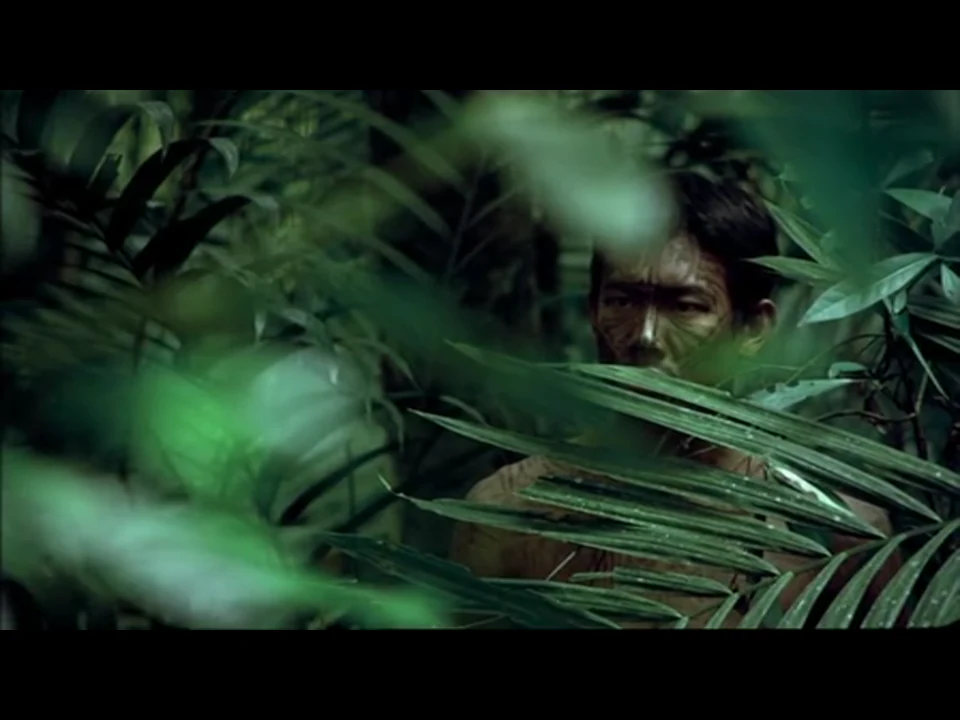
The body first appears as a difficult-to-identify fragment; a following intertitle links the gaze to the soldier's sound device. Bilibili timecode 01:17:54.
Open scene evidenceIn From the Clouds to the Resistance, mythical text, speech act, and land do not form an explanatory relation. The land is read as a stratum inscribed by struggle, while speech crosses it without exhausting it; reading relinks history after both series reach their limits.[1, pp. 251–252, 260–262, 265][4, pp. 362–365]
In Tropical Malady, radio calls restore neither command nor coordinates while forest sound occupies the auditory field; a partial body among leaves is then supplemented by an intertitle naming a relation of looking absent from the image. The viewer must combine failed communication, occlusion, text, and memory of the first movement to read the forest relation.
Film comparisons
The Ganges Woman
Two timeless voicesSound and image unfold separately and touch only at their limits and a point at infinity.
India Song
Two strata of an absent eventVoices preserve relational history while rooms and attitudes form a visual stratum.
From the Cloud to the Resistance
The land must be readMyth, speech act, and strata of struggle are relinked at their limits.
Tropical Malady
A second opening resets the rulesBlackout, tiger image, forest sound, and text test the chain from cut to reading.
How scholarship advances the problem
David Deamer
Deleuze's Cinema BooksPlaces the lectosign within Deleuze's taxonomy and connects its silent and audible forms.
Used to build the three-stage method of autonomous series, common limit, and relinking.Open full citation ↓Ronald Bogue
Deleuze on CinemaSystematically explains the audio-visual thought structure of noosigns and lectosigns.
Used to distinguish structural reading from explanatory sound and symbolic decoding.Open full citation ↓David Deamer
A Deleuzian CineosisPlaces lectosigns within syntheses of time and cinematic semiosis.
Used to render each relinking route as a testable relation map.Open full citation ↓References
- 01
DELEUZE PRIMARY TEXT Gilles Deleuze, Cinema 2: The Time-Image, trans. Hugh Tomlinson and Robert Galeta (University of Minnesota Press, 1989).
Chapter 7, pp. 173–180; chapter 9, pp. 245–265; chapter 10, pp. 277–279Publisher record and purchase access - 02
SCHOLARSHIP David Deamer, Deleuze's Cinema Books: Three Introductions to the Taxonomy of Images (Edinburgh University Press, 2016).
Chapter 16, “Lectosigns,” pp. 162–171Publisher chapter record - 03
SCHOLARSHIP Ronald Bogue, Deleuze on Cinema (Routledge, 2003).
Chapter 6, “Noosigns and Lectosigns,” pp. 165–196Publisher record and preview - 04
SCHOLARSHIP David Deamer, “A Deleuzian Cineosis: Cinematic Semiosis and Syntheses of Time,” Deleuze Studies 5.3 (2011), pp. 358–382.
Lectosign chain at pp. 362–365DOI and journal access · DOI 10.3366/dls.2011.0026